
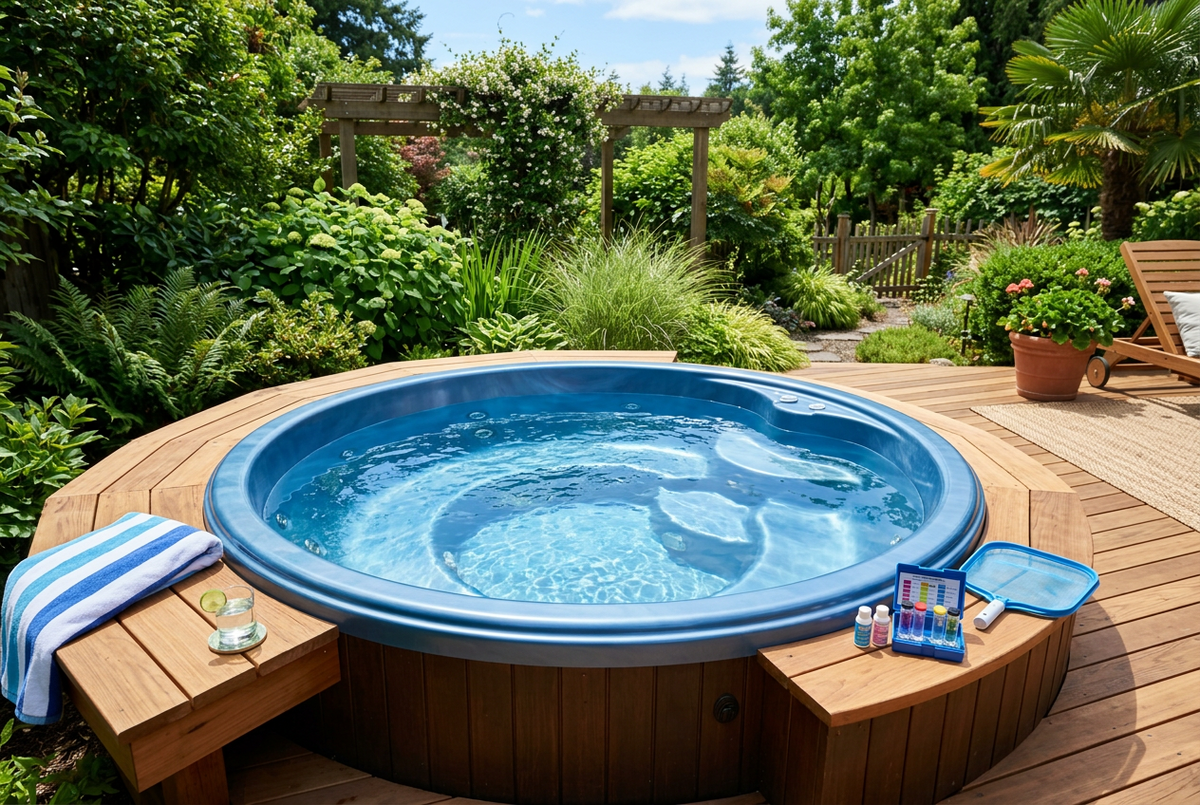
To prevent algae in a hot tub, keep your sanitizer at a steady level, keep pH between 7.2 and 7.8, run the filtration cycles every day, clean the filter on a schedule, and keep the cover on when nobody is soaking. Algae struggles to take hold in clean, balanced, well-circulated water.
Most owners only notice the problem once the water turns green and slimy. By then, you're shocking, scrubbing, and sometimes draining and starting over. A few small habits can prevent that. This guide explains why algae shows up and the routine that keeps it out.
Hot Tub Algae Prevention at a Glance
|
Target |
Recommended range or schedule |
|
Free chlorine |
At least 3 ppm (FROG @ease: 0.5 to 1.0 ppm) |
|
Bromine |
4 to 8 ppm |
|
pH |
7.2 to 7.8 (7.4 to 7.6 is ideal) |
|
Total alkalinity |
80 to 120 ppm |
|
Test |
Before each soak and 2 to 3 times a week |
|
Shock |
Weekly and after heavy use |
|
Filter |
Rinse every 1 to 2 weeks; deep clean monthly; replace every 12 to 24 months |
|
Drain and refill |
About every 3 to 4 months |
What Causes Algae to Grow in a Hot Tub?
Algae are tiny plant-like organisms. Their spores drift on the wind, hitch a ride on dust, pollen, and leaves, and can even come in with your fill water. Warm water gives them an ideal place to grow. Once conditions tip in their favor, they multiply fast, and a clear hot tub can look green within a day or two.
These are the most common triggers:
· Low sanitizer: When chlorine or bromine runs low, nothing is left to destroy spores and bacteria. This is the leading cause of an algae bloom.
· Unbalanced pH: Chlorine loses much of its strength as pH rises above 7.8. You can add plenty of sanitizer and still lose the fight.
· Sunlight: Algae need light to grow, so a hot tub left uncovered for hours or days invites growth.
· Weak circulation: Still water lets algae settle. If filtration cycles are too short, sanitizer never reaches every corner.
· A dirty filter: A clogged cartridge can't trap debris, and that debris becomes food.
· A dirty cover: Mold, mildew, and spores can grow on the underside of the cover and drip back into the water.
· Bather waste: Sweat, body oils, sunscreen, and lotion feed growth and use up sanitizer.
· Fill water and nutrients: Hose water can carry spores, metals, and phosphates that algae feed on.
Algae isn't always green. Mustard or yellow algae can appear as a yellowish film. Pink or white slime, often called water mold, isn't actually algae, but a bacterial or fungal biofilm that grows in the same poorly sanitized conditions. Slimy patches on the shell, in the footwell, or along the waterline are early warning signs.
How to Prevent Algae in a Hot Tub: 10 Habits That Work
Think of this as a routine, not a rescue plan. Each habit below closes one of the doors algae uses to get in.
1. Test the Water a Few Times a Week
Use test strips or a liquid kit to check sanitizer, pH, and total alkalinity before each soak and at least two to three times a week. Guessing is how most algae problems begin. Test again after heavy use, a party, or a big rainstorm. Keep strips capped and dry, and replace them by the expiration date. Shop FROG @ease Test Strips or browse our water testing collection.
2. Keep Your Sanitizer Steady
Whether you use chlorine or bromine, consistency matters more than big doses. The CDC recommends at least 3 ppm of free chlorine or 4 to 8 ppm of bromine in hot tubs. Add the amount your product label lists for your hot tub's volume, then recheck the level.
A floating dispenser or cartridge system holds levels steadier than adding sanitizer by hand. The FROG @ease Floating Sanitizing System uses minerals plus self-regulating SmartChlor to keep chlorine at a steady 0.5 to 1.0 ppm, with up to 75 percent less chlorine than traditional methods. Bromine users can choose Spa FROG Serene. You still need to test, but the levels don't swing as much between soaks. Shop sanitizers in our hot tub chlorine and hot tub bromine collections.
3. Balance Alkalinity and pH First
Keep total alkalinity between 80 and 120 ppm and pH between 7.2 and 7.8, ideally 7.4 to 7.6. Adjust alkalinity first, then pH, since alkalinity helps hold pH steady. High pH makes chlorine much less effective and can cloud the water, while low pH can corrode equipment and irritate skin. Balance the water before you add sanitizer or shock so the chemicals can do their job. Products like the FROG Balancing Basics Kit and our water balancing collection make adjustments simple.
4. Shock the Water on a Schedule
A weekly shock breaks down the sweat, oils, and lotions that sanitizer alone can't handle. Shock more often if you soak daily or host guests. Open the cover while the shock circulates so gases can escape.
· Non-chlorine shock (MPS), such as FROG Maintain, oxidizes contaminants for routine weekly care. It lets you soak again sooner, but it isn't a sanitizer.
· Chlorine shock, such as SpaGuard Enhanced Shock, also sanitizes and is the better choice after heavy use or if you see early signs of algae.
· In bromine hot tubs, use a shock labeled as compatible with bromine. Shocking also reactivates spent bromide.
Browse our hot tub shock collection for more options.
5. Stay on Top of Your Hot Tub Filter
Rinse the filter cartridge with a garden hose every week or two, directing water between the pleats. Deep clean it about once a month with a spa filter cleaner like SpaGuard Filter Cleaner, because a rinse alone won't remove the oils trapped in the pleats. Replace the cartridge every 12 to 24 months, or sooner if the pleats are torn, flattened, or heavily stained. A spare cartridge lets you swap in a clean one while the other dries. See our hot tub filter cartridges.
6. Use the Cover Every Time
A tight-fitting hot tub cover blocks sunlight, keeps out leaves, dust, and pollen, and holds in heat. Wipe the underside every few weeks with a hot tub-safe cleaner like FROG Surface & Cover Cleaner so it doesn't become a breeding ground for mold and spores. Let the cover air out after shocking. If your cover is waterlogged, sagging, or smells musty, it may be time for a replacement. A foam-free cover like the Thrml AIRCAP 1 resists the waterlogging that ruins traditional foam covers.
7. Keep the Water Moving
Good circulation carries sanitizer to every corner and pulls debris toward the filter. Run the filtration cycles your manufacturer recommends, usually several hours a day, even in weeks when you barely use the hot tub. Running the jets for a few minutes every day or two also helps reach the footwell and seats.
8. Rinse Off Before You Get In
A quick shower removes lotion, deodorant, sunscreen, and body oils. It sounds minor, but it cuts the organic load your sanitizer has to fight and helps prevent cloudy water and foam too.
9. Drain, Scrub, and Refill on Time
Even with great care, water wears out as dissolved solids build up. Plan a full drain and refill about every three to four months, depending on how often you soak. Before draining, run a plumbing cleaner like SpaGuard System Flush to remove biofilm from the lines, where algae and bacteria can hide. While the hot tub is empty, wipe the shell and waterline with a spa-safe cleaner. When you refill, a hose pre-filter helps keep metals and debris out.
Not sure if it's time? See our guide to the signs your hot tub water needs to be drained.
10. Use Algaecide Only as a Backup
Most hot tubs don't need an algaecide when sanitizer, pH, filtration, and the cover are handled well. If you choose one, use only a product labeled for spas and hot tubs, and follow the label exactly. Many pool algaecides contain copper, which can tint spa water green and stain surfaces, and some polyquat or quat algaecides can foam in jetted water.
Algaecide is a preventive step, not a fix for an algae bloom. If you already see growth, brush the surfaces, shock with a chlorine-based spa shock, and clean the filter first. Phosphates from fill water, leaves, and lotions can also feed algae, and a SpaGuard Phosphate Remover can help reduce them.
Don't Use Pool Chemicals in Your Spa
Most pool chlorine tablets are trichlor, which is highly acidic and dissolves slowly. In a few hundred gallons of hot water, it can drop pH quickly and damage the shell, heater, and cover, and many manufacturers warn that it can void your warranty. Pool shock and pool algaecides are also made for much larger volumes of water. Stick with spa-labeled sanitizers like granular dichlor, bromine, or a FROG mineral system.
Weekly Algae Prevention Checklist
· Test sanitizer, pH, and alkalinity two to three times a week and before soaking.
· Adjust alkalinity, then pH, then sanitizer.
· Shock once a week and after heavy use.
· Rinse the filter every week or two.
· Keep the cover on whenever the hot tub isn't in use.
· Check the waterline and footwell for slime or film.
Bottom Line
Algae is a maintenance problem, not bad luck. Balanced water, steady sanitizer, a weekly shock, a clean filter, a covered hot tub, and good circulation take away the conditions algae needs. Spend ten minutes testing and tending the water each week, and you'll rarely face a green hot tub or a weekend of scrubbing.
Need spa-safe sanitizer, test strips, shock, or filter care to put this routine in place? Browse our hot tub chemicals and hot tub cleaning and maintenance collections at HotTubPirate.com, or call (732) 366-9660 for help. For more routine tips, see our 10 tips to keep your hot tub clean and safe.
FAQs
How do you keep algae out of a hot tub?
Keep sanitizer and pH in range, shock weekly, clean the filter regularly, run daily filtration cycles, and cover the hot tub when it isn't in use.
Why did my hot tub water turn green overnight?
Usually low sanitizer, high pH, or a dirty filter let algae spores multiply quickly in warm water. Clear green water can also point to copper or other metals rather than algae.
How often should I shock my hot tub?
About once a week for most hot tubs, and more often after heavy use or large gatherings. Follow your shock's label directions.
What pH level prevents algae in a hot tub?
Keep pH between 7.2 and 7.8, ideally 7.4 to 7.6. In that range chlorine and bromine work well, and the water stays comfortable.
Can I use pool chemicals in my hot tub?
Not interchangeably. Pool tablets are highly acidic and can damage a spa, and many pool algaecides contain copper or cause foaming. Choose products made for hot tubs.
Does a hot tub cover really help prevent algae?
Yes. A cover blocks the sunlight algae need and keeps debris, pollen, and spores out of the water. Keep the underside clean so it doesn't harbor mold.
Do I need algaecide in a hot tub?
Usually not. Steady sanitizer, balanced pH, a clean filter, and a cover prevent most algae. If you use one, choose a spa-labeled product and avoid copper-based pool algaecides.
What is the pink or white slime in my hot tub?
Pink or white slime is usually a bacterial or fungal biofilm, not algae. Shock the water, clean the filter, flush the plumbing, and drain and refill if it keeps coming back.