
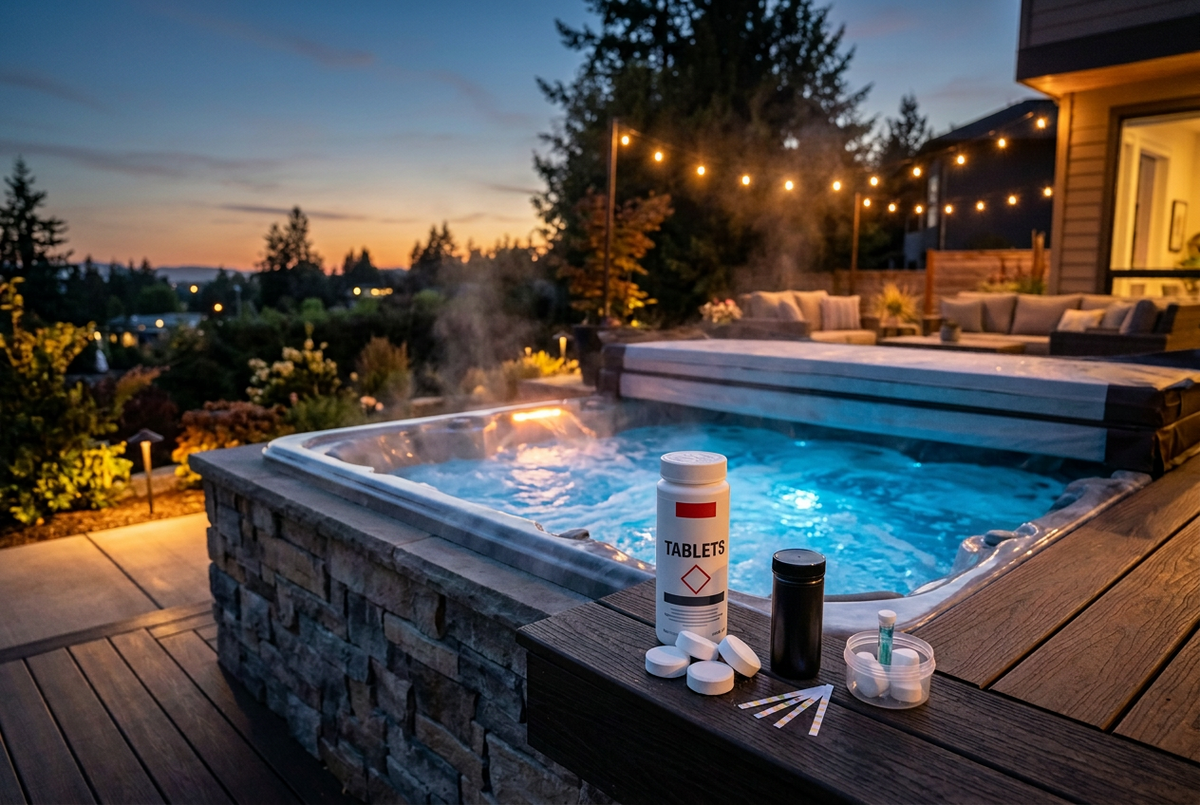
Switching to bromine hot tub care takes more than replacing chlorine with bromine tablets. The two sanitizers work differently, and skipping the drain, using the wrong feeder, or forgetting to build a bromide reserve can lead to cloudy water, low sanitizer readings, and irritated skin. You also need to keep an eye on pH, alkalinity, and bromine levels as the new routine settles in.
The good news is that the change doesn't have to be complicated. With the right supplies and a few simple habits, you can avoid the most common mistakes and keep your hot tub clean and comfortable. Here's what to know before you make the switch.
What Changes When You Switch From Chlorine to Bromine
Bromine stays effective in hot water and across a wider pH range than chlorine, and it generally has a milder odor. It also works differently. Spent bromine becomes bromide, which stays in the water and is reactivated into active bromine each time you shock. That's why bromine hot tubs start with a bromide reserve and rely on regular shocking.
Before switching to bromine hot tub care, make sure you have:
· A bromine floater, brominator, or approved in-line feeder, or a system like Spa FROG Serene
· Bromine tablets for ongoing sanitizing
· Sodium bromide or a brominating granule to build the bromide reserve at start-up
· A shock that's compatible with bromine
· Test strips that read bromine, pH, and total alkalinity
· pH and alkalinity adjusters
The Sirona Bromine Start Up Kit bundles bromine tablets, sodium bromide, shock, foam remover, and test strips in one box.
Bromine Switch Checklist
1. Drain the hot tub, flush the plumbing, and clean the shell and filter.
2. Refill with fresh water and balance total alkalinity, then pH.
3. Build the bromide reserve with sodium bromide or a start-up dose of brominating granules.
4. Shock to activate the bromide and bring bromine into range.
5. Load bromine tablets into a clean floater or feeder.
6. Test before each soak and adjust as needed, especially in the first few weeks.
Common Mistakes When Switching to Bromine
Switching to bromine is straightforward if you use the right products and keep a consistent routine. Avoiding these five mistakes will help keep your water clean, balanced, and comfortable.
1. Skipping the Drain and Clean Before the Switch
Old water carries sanitizer residue, cyanuric acid from dichlor, dissolved solids, body oils, and other buildup that makes the new sanitizer harder to manage. Fresh water gives bromine a clean start. If your hot tub uses a mineral system, a fresh fill matters even more. FROG @ease and Spa FROG Serene aren't compatible with each other, so drain and start fresh when switching between them.
Plan the switch for your next scheduled water change. Most hot tubs need fresh water every three to four months, depending on use and your manufacturer's recommendations. Before refilling:
· Flush the plumbing with a line cleaner to remove buildup from the lines.
· Clean the shell and rinse, deep clean, or replace the filter cartridge.
· Refill, balance the water, and start your bromine routine.
2. Mixing Chlorine and Bromine Products
Never combine chlorine and bromine products in their dry or concentrated form, or load them into the same floater or feeder. Mixing concentrated chemicals can cause dangerous reactions. Before adding bromine tablets, empty and clean any dispenser that held chlorine, or start with a new one.
This doesn't mean chlorine can never touch bromine water. Many bromine systems use a chlorine or non-chlorine shock to reactivate bromide, and the Spa FROG Serene kit includes FROG Jump Start shock for exactly that purpose. Use only shocks labeled as compatible with bromine, and add them directly to the water as directed.
Store each chemical in its original container, separately, in a cool, dry place away from children and pets. Don't use pool chlorine tablets in a hot tub. Many contain trichlor, which is highly acidic and can damage spa components. Choose products clearly labeled for spas and hot tubs.
3. Ignoring pH and Alkalinity
Most bromine tablets are slightly acidic and can gradually lower pH and total alkalinity, so test regularly. The CDC recommends keeping hot tub pH between 7.2 and 7.8.
Test pH and total alkalinity often during the first few weeks. If readings are out of range, adjust alkalinity first, then pH, following product instructions. Small adjustments are easier than correcting badly unbalanced water. Low pH can corrode heaters and fittings and irritate skin and eyes, while high pH can cause cloudy water and scale. Products like FROG TArget and the FROG Balancing Basics Kit make adjustments simple.
4. Using the Wrong Feeder or Adding Tablets by Hand
Place bromine tablets in a compatible floater, brominator, or in-line feeder, never directly in the hot tub. A tablet sitting on the seat or floor can bleach or damage the shell. Avoid putting tablets in the skimmer or filter area unless your spa manufacturer approves it, since concentrated sanitizer flowing through the heater can damage equipment.
Check how your spa is set up before you buy a dispenser. Some hot tubs have a built-in cartridge holder for in-line systems, while others work best with a floating dispenser. Set the floater's vents so bromine stays in range, remove the floater while soaking, and check regularly that it has enough tablets.
For a simpler option, Spa FROG Serene uses prefilled mineral and bromine cartridges in either a floating system or an in-line version for hot tubs with built-in cartridge holders. The minerals reduce bromine use by up to 50 percent, and you replace the bromine cartridge about once a month.
5. Treating Bromine as Set and Forget
Bromine can make maintenance easier, but you still need to test, shock, and clean the filter:
· Test before each soak and at least two to three times a week, plus after heavy use.
· Shock weekly and after heavy use with a bromine-compatible shock. Shocking breaks down body oils, lotions, and organic waste, and reactivates bromide into active bromine.
· Rinse the filter every week or two, deep clean it monthly, and replace it about every 12 to 24 months.
· Check your bromine reading against your product label. Label ranges vary, and the CDC recommends 4 to 8 ppm bromine for hot tubs.
Use test strips with a bromine pad. If you use a DPD test kit that reads chlorine, multiply the result by 2.25 to estimate bromine.
Other Mistakes to Watch For
· Skipping the bromide reserve. Tablets alone can take days to bring a fresh fill into range. Build the reserve first, then shock.
· Adding stabilizer. Cyanuric acid doesn't stabilize bromine, so don't add it to a bromine hot tub.
· Soaking right after shocking. Wait until the bromine level is back in the recommended range.
· Using old test strips. Expired strips can give false readings. Store them sealed and replace them by the expiration date.
· Switching back without draining. If you later move from bromine to chlorine, drain completely. Leftover bromide turns added chlorine back into bromine.
Bromine Products Available at Hot Tub Pirate
Hot Tub Pirate carries hot tub bromine products from FROG, SpaGuard, Sirona, and Leisure Time, including:
· Bromine tablets: SpaGuard Brominating Tablets, Sirona Bromine Tablets, and Leisure Time Bromine Tablets
· Granules and concentrate: SpaGuard Brominating Concentrate and Sirona Brominating Granular
· Start-up kit: the Sirona Bromine Start Up Kit
· Mineral bromine systems: Spa FROG Serene floating and in-line systems and replacement cartridges
· Shock and testing: FROG Jump Start, Sirona Replenish, and our water testing collection
Browse the hot tub bromine collection to compare products and choose one that fits your spa. If you're switching to bromine hot tub care for the first time, a start-up kit is the easiest way to gather the essentials.
Still weighing your options? Our guide to FROG @ease vs. Spa FROG Serene compares low-chlorine and low-bromine mineral systems.
Start Your Bromine Switch With Clean Water
A successful switch comes down to five simple habits: start with clean water, keep chemicals separate, balance pH and alkalinity, use the correct feeder, and test and shock regularly. Add a bromide reserve at start-up, and ongoing maintenance gets much easier.
Need help choosing the right supplies? Contact Hot Tub Pirate at (732) 366-9660 for help with your hot tub setup.
Frequently Asked Questions
Is bromine better than chlorine for a hot tub?
Chlorine is usually cheaper and works faster, while bromine stays effective in hot water and has a milder odor. The best choice depends on your preferences, skin sensitivity, and spa setup. Both require regular testing and maintenance.
Do I need to drain my hot tub before switching to bromine?
It's strongly recommended. Draining removes old sanitizer, cyanuric acid, and buildup so bromine starts with clean water. Flush the plumbing, clean the shell and filter, refill, balance the water, and then build your bromide reserve.
Can I use bromine and chlorine together in a hot tub?
Don't mix chlorine and bromine products together or use them in the same feeder. However, many bromine systems use a bromine-compatible shock, sometimes chlorine-based, to reactivate bromide. Follow each product's label.
What is a bromide reserve?
A bromide reserve, or bromide bank, is a base level of bromide ions added to a fresh fill, usually with sodium bromide. Shocking converts bromide into active bromine, which helps bromine reach and stay in range quickly.
How often should I shock a bromine hot tub?
Shock weekly and after heavy use with a bromine-compatible shock, following the product label. Shocking removes contaminants and reactivates spent bromide.
What bromine level should my hot tub have?
The CDC recommends 4 to 8 ppm bromine for hot tubs, with pH between 7.2 and 7.8. Product labels may list a different range, so follow the directions for your product.
Can I go back to chlorine after using bromine?
Yes, but drain completely first. Leftover bromide converts added chlorine back into bromine, so the switch won't work without fresh water.
How often should I test bromine levels in my hot tub?
Test before each soak and at least two to three times a week, plus after heavy use. Regular testing keeps bromine, pH, and alkalinity in range.