
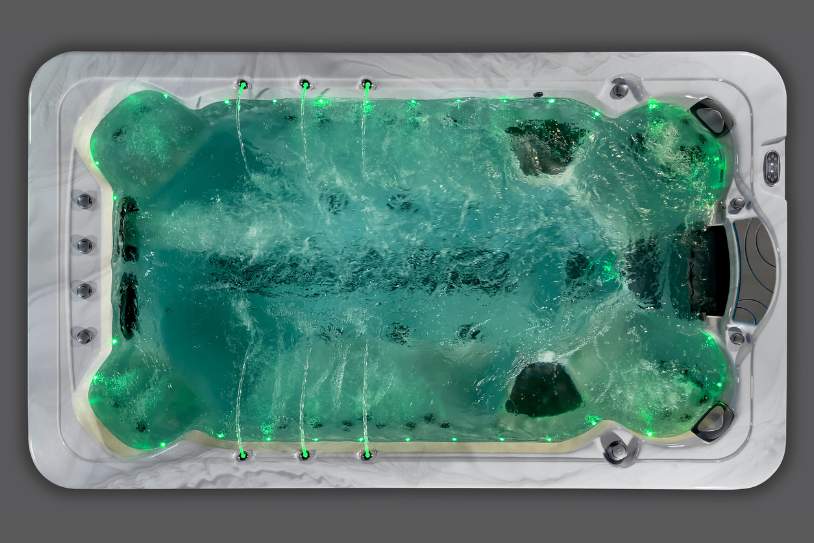
Green hot tub water usually points to algae growth caused by low sanitizer levels. Poor filtration and unbalanced water chemistry can also contribute, and in some cases metals such as copper cause a green tint even when no algae is present. The right fix depends on what's behind the color, so testing comes first.
This guide covers the common causes, how to tell algae from metals, why you should avoid soaking until the water is safe, and the steps to clear it. You'll also learn how to keep green water from coming back.
Quick Answer
· Cloudy or murky green water with slimy surfaces is usually algae. Balance the water, shock with a chlorine-based spa shock, clean the filter, and retest.
· Clear water with a green or blue-green tint usually means metals, often copper. Use a spa stain and metal control product instead of an algae treatment.
· If the water stays green after treatment, drain, flush the plumbing, clean the shell, and refill.
· Don't soak until the water is clear and sanitizer, pH, and alkalinity are back in range.
What Causes Green Hot Tub Water?
Algae is the most common cause of green water, but other issues can cause the same color change. Knowing what to look for helps you choose the right treatment.
|
What you see |
Likely cause |
Best first step |
|
Cloudy, murky green water; slimy shell or waterline |
Algae from low sanitizer |
Balance, shock, and clean the filter |
|
Clear water with a green or blue-green tint |
Copper or other metals |
Test for metals; add a metal control product |
|
Green tint after shocking |
Metals reacting with the oxidizer |
Use metal control before the next shock |
|
Yellow-green film on the surface in spring |
Pollen |
Skim, clean the filter, and use a clarifier |
Low or Unstable Sanitizer
Chlorine or bromine prevents algae growth and keeps the water clean. If sanitizer levels drop below the recommended range, algae can multiply quickly. The CDC recommends keeping free chlorine at or above 3 ppm and bromine between 4 and 8 ppm in hot tubs. If you use a mineral system like FROG @ease, keep chlorine in its 0.5 to 1.0 ppm range and replace cartridges on schedule.
Heavy use, hot weather, leaving the cover off, and skipping tests can all reduce sanitizer levels. In chlorine hot tubs treated with dichlor, cyanuric acid builds up over time and makes chlorine less effective, which is another reason to drain on schedule.
A Weak or Dirty Filter
Your hot tub filter traps oils, debris, and dead algae. If the cartridge clogs, it can't remove particles properly, so they keep circulating. Rinse the cartridge every week or two, deep clean it monthly, and replace it every 12 to 24 months, or sooner if the pleats are torn, flattened, or heavily stained.
Also check your filtration schedule. Most hot tubs need several hours of filtration a day. Poor circulation combined with a dirty filter makes it much harder to keep the water clear.
Unbalanced pH and Alkalinity
Water chemistry affects how well your sanitizer works. As pH rises above 7.8, chlorine becomes much less effective, even when the test shows an adequate level. Aim for a pH between 7.2 and 7.8 and total alkalinity between 80 and 120 ppm. Adjust alkalinity first, then pH, because alkalinity helps keep pH stable.
Low pH causes a different problem. Acidic water can corrode copper heater parts and fittings, releasing metals that tint the water green. Regular testing helps you catch imbalances before they affect water clarity or equipment.
Metals in the Fill Water or Equipment
Green water doesn't always mean algae. Copper from fill water, corroding equipment, or copper-based algaecides and ionizers can give spa water a green or blue-green tint. Well water may also contain iron and manganese, which usually cause brown, orange, or rust-colored tints.
Look at the water's clarity. Algae usually makes it cloudy or murky, while metals can turn clear water green. Test the water before adding treatment, and use a spa stain and metal control product if needed. Algae treatments won't solve the problem when metals are responsible, and shocking water that's high in metals can make staining worse.
Is It Safe to Soak in Green Hot Tub Water?
No. Avoid using the hot tub until the water is clear and the chemical readings are within the recommended ranges. Green water can mean sanitizer levels are too low to control bacteria, including germs that cause hot tub rash and other infections.
Algae can also make the shell and steps slippery, and poor water chemistry may irritate your skin and eyes. Fix the problem, retest, and wait until sanitizer, pH, and alkalinity are back in range before getting in.
How to Clear Green Hot Tub Water Step by Step
Follow these steps to treat the water and reduce the chance of algae returning.
Step 1: Test and Balance the Water
Before adding chemicals, check the pH, total alkalinity, and sanitizer levels. Adjust alkalinity first, then pH, so the shock works as well as possible. Use fresh test strips and keep them capped in a dry place, because old or damp strips can give inaccurate readings. Shop FROG @ease Test Strips or browse our water testing collection.
If the water is clear but has a green tint, test for metals before treating it for algae. Write down your results and the date so you can compare them after treatment and spot problems that come back.
Step 2: Shock the Hot Tub
Shock breaks down organic waste and contaminants that regular sanitizing alone may not remove. For algae, use a chlorine-based spa shock, such as granular dichlor or a chlorinated shock like SpaGuard Enhanced Shock. Non-chlorine shocks, such as PristinePower Non-Chlorine Shock Oxidizer, oxidize contaminants but don't kill algae on their own, so save them for routine weekly oxidizing. In a bromine hot tub, use a shock labeled as compatible with bromine.
1. Remove any floating dispenser and open the cover.
2. With the jets or circulation pump running, add the dose on the product label for your hot tub's gallons.
3. Let the water circulate for the time the label specifies, and leave the cover open so gases can escape.
4. Brush the waterline, seats, and footwell to loosen algae.
If the water is still cloudy or green, you may need another treatment. Retest before adding a second dose. Using too much shock can push chemical levels above the recommended range and delay when it's safe to soak.
Step 3: Clean or Replace the Filter
After shocking, clean the filter to remove dead algae and trapped debris. Remove the cartridge and rinse it with a garden hose, directing water between the pleats. Soak it in a spa filter cleaner like SpaGuard Filter Cleaner or spray it with Sirona Spray & Rinse Filter Cleaner, then rinse thoroughly.
Replace the cartridge if the pleats are torn, flattened, or heavily stained. Keeping a spare filter makes maintenance easier, because you can use one while the other dries. After reinstalling the clean cartridge, run the pump to keep the water moving.
Step 4: Clarify, Run, Retest, and Drain If Needed
A spa clarifier, such as SpaGuard Water Clarifier, helps the filter capture fine dead algae particles. Let the pump run for several hours, then retest. If the water is clear and the readings are in range, the treatment is likely complete. Rinse the filter again, since it will have trapped more debris.
If the water stays green after treatment, drain and refill:
1. Add a plumbing cleaner like SpaGuard System Flush and run the jets as directed to remove biofilm from the lines.
2. Drain the hot tub completely.
3. Clean the shell, waterline, and cover underside.
4. Clean or replace the filter.
5. Refill, balance the water, and start your sanitizer. FROG Jump Start helps establish the initial chlorine level after a fresh fill.
Many hot tubs need draining every three to four months, depending on use and water conditions. See our guide to the signs your hot tub water needs to be drained.
Treating Green Water Caused by Metals
If testing points to metals, follow a different routine:
1. Check and correct pH and alkalinity first, since low pH can release more metals from equipment.
2. Add a spa stain and metal control product, such as SpaGuard Stain & Scale Control, according to the label.
3. Let the pump run so the filter can capture the bound metals, then clean the filter.
4. Avoid shocking until metals are under control, since shock can turn metals into stains.
5. If you fill from a well, pre-filter the fill water with a hose filter to keep metals out of new water.
Hot Tub Pirate Products for Green Water
Hot Tub Pirate carries products to test, treat, and maintain your spa water:
· Testing: test strips and kits in our water testing collection
· Chlorine shock: SpaGuard Enhanced Shock, plus spa chlorine in our hot tub chlorine collection
· Non-chlorine oxidizer: PristinePower Non-Chlorine Shock Oxidizer
· Start-up shock: FROG Jump Start
· Filter care: SpaGuard Filter Cleaner and ProTeam Spa Filter Cleaner
· Clarifiers: SpaGuard Water Clarifier and Sirona Spa Clarifier
· Metal control: SpaGuard Stain & Scale Control and PristineClean Metal Control
· Plumbing cleaner: SpaGuard System Flush
Online orders placed before 3 p.m. Monday through Saturday ship the same day, and online orders over $50 ship free within the USA. Browse all hot tub chemicals.
How to Prevent Green Hot Tub Water From Returning
Regular maintenance keeps algae from taking hold. Follow this simple schedule:
|
How often |
What to do |
|
Before each soak |
Test sanitizer and pH |
|
2 to 3 times a week |
Test sanitizer, pH, and alkalinity, and adjust as needed |
|
Weekly and after heavy use |
Shock according to the product label |
|
Every 1 to 2 weeks |
Rinse the filter |
|
Monthly |
Deep clean the filter; replace sanitizer cartridges on schedule |
|
Every 3 to 4 months |
Flush the lines, drain, clean, and refill |
· Shower before soaking to reduce body oils, lotions, and sweat in the water.
· Keep the cover on when the hot tub isn't in use to block sunlight and debris.
· Run filtration for enough hours each day to circulate all the water.
· In spring, skim pollen and rinse the filter more often.
These checks take only a few minutes and help you catch problems before the water changes color.
Final Thoughts
Green hot tub water can result from low sanitizer, poor filtration, unbalanced chemistry, or metals. Start by testing the water to identify the cause, then balance the chemistry, apply the right treatment, and clean the filter. Addressing the underlying problem helps keep it from returning. If you need help choosing the right supplies, contact Hot Tub Pirate at (732) 366-9660.
FAQs
How do you fix green hot tub water?
Test and balance the water, then shock with a chlorine-based spa shock according to the label. Brush the surfaces, clean the filter, add a clarifier, and run the pump. If the water stays green, drain, flush the lines, clean, and refill.
Is green hot tub water safe to use?
No. Avoid soaking until the water is clear and chemical levels are back in the recommended ranges. Green water may mean sanitizer is too low to control bacteria, and algae can make surfaces slippery.
Why is my hot tub water green but clear?
Clear green water usually indicates copper or other metals rather than algae. Test for metals and treat with a spa stain and metal control product instead of an algae treatment.
Why did my hot tub turn green after I shocked it?
Shock can react with dissolved metals such as copper and make the green color visible. Balance pH, add a metal control product, and let the filter remove the metals before shocking again.
Will non-chlorine shock kill algae in a hot tub?
Not on its own. Non-chlorine shock oxidizes contaminants but isn't a sanitizer. Use a chlorine-based spa shock for algae, or a bromine-compatible shock in bromine hot tubs.
Can I use pool algaecide in my hot tub?
Use only products labeled for spas. Many pool algaecides contain copper, which can tint spa water green and stain surfaces, and some cause foaming in hot tubs.
How long does it take to clear green hot tub water?
Mild cases often clear within a day of shocking, filtering, and retesting. Severe algae or persistent green water may need a drain, line flush, and refill.
How can I prevent green hot tub water?
Test two to three times a week, keep sanitizer, pH, and alkalinity in range, shock weekly, clean the filter regularly, keep the cover on, and drain every three to four months.