
Most hot tub maintenance mistakes come from small habits that seem harmless in the moment, like skipping a water test or letting a filter go too long between cleanings. These habits add up quietly until the water turns cloudy, the sanitizer stops holding, or a pump starts working harder than it should.
The good news is that every one of these mistakes is easy to fix. Below are the seven most common ones, what they cost you, and the simple habits that prevent them.
Hot Tub Maintenance Mistakes at a Glance
|
Mistake |
What it leads to |
The fix |
|
Skipping water tests |
Guesswork, overcorrection, unbalanced water |
Test 2 to 3 times a week |
|
Neglecting the filter |
Cloudy water, poor flow, pump strain |
Rinse weekly, deep clean monthly, replace every 12 to 24 months |
|
Guessing at chemical doses |
Wasted product, irritation, weak sanitizing |
Dose by the label and your spa's gallons |
|
Ignoring a worn cover |
Heat loss, sanitizer breakdown, debris |
Inspect regularly, replace every 3 to 7 years |
|
Adding chemicals to cloudy water |
New imbalances, wasted product |
Test and check the filter first |
|
Delaying a drain |
Water that can't be corrected |
Drain every 3 to 4 months or when signs appear |
|
No consistent routine |
Problems caught late |
Follow a simple weekly schedule |
Why These Mistakes Happen So Often
Hot tub care feels simple on the surface: add chemicals, run the jets, enjoy the water. But water chemistry shifts constantly with use, temperature, weather, and bather load, and small oversights compound fast.
Most hot tub maintenance mistakes aren't the result of not knowing better. They happen because a step gets skipped once, the water seems fine, and the shortcut quietly becomes a habit. By the time a problem is visible, it has usually been building for days or weeks.
1. Skipping Regular Water Testing
Guessing at chemical levels instead of testing them is one of the most common hot tub maintenance mistakes. Adding sanitizer or balancers based on how the water looks, rather than what a test shows, often leads to overcorrection in one direction and a new imbalance somewhere else. Clear water isn't always balanced water.
Water testing strips take only a few seconds, and testing two to three times a week gives you a reliable picture of sanitizer, pH, and total alkalinity before problems become visible. Test more often after heavy use, a party, or a big rainstorm.
Use these target ranges as your guide:
|
Water test |
Target range |
|
Free chlorine |
At least 3 ppm |
|
Bromine |
4 to 8 ppm |
|
pH |
7.2 to 7.8 |
|
Total alkalinity |
80 to 120 ppm |
|
Calcium hardness |
150 to 250 ppm |
Avoid it: Keep strips near the spa so testing becomes part of every soak. If you use a mineral system, choose strips made for it, like FROG @ease Test Strips for SmartChlor systems. Browse all water testing supplies.
2. Letting the Filter Go Too Long Between Cleanings
A dirty filter cartridge can't do its job, no matter how well balanced the water is. Debris, oils, and particles keep recirculating instead of getting trapped, which puts more strain on your sanitizer and can reduce water flow through the pump and heater.
Filters also wear out. Most cartridges need replacement every 12 to 24 months, depending on use. A worn filter is easy to overlook because it can still look intact from the outside, even when the pleats have lost their ability to trap fine particles.
Avoid it:
· Rinse the cartridge with a garden hose every week
· Deep clean it monthly with a product like SpaGuard Filter Cleaner, then rinse thoroughly so no cleaner residue causes foam
· Replace it sooner if pleats are torn, flattened, or heavily stained
· Keep a spare cartridge to rotate so one can dry completely between uses
3. Adding Chemicals Without Checking the Label or Your Spa's Volume
Not all sanitizers and balancers behave the same way, and dosing amounts vary by product concentration and spa size. Adding chemicals by habit, or by the capful, rather than checking the product label against your spa's water volume, is one of the more avoidable hot tub maintenance mistakes.
Overdosing wastes product and can irritate skin and eyes, while underdosing leaves the water under-protected. A dose that's right for a 250-gallon spa can be far too little for a 450-gallon model.
Avoid it:
· Know your gallons. Your owner's manual or spec sheet lists your spa's water capacity. Write it on the inside of the cabinet door or your chemical storage bin.
· Read every label. Even two products for the same job can have very different dosing instructions.
· Add one chemical at a time with the jets running and the cover open, and wait for it to circulate before adding the next.
· Adjust alkalinity before pH, since alkalinity helps hold pH steady.
· Never mix chemicals together before adding them to the water.
4. Ignoring a Worn or Poorly Sealed Cover
A hot tub cover does more than keep debris out. It slows evaporation, limits how much sunlight reaches the water, and holds in heat, all of which affect how quickly sanitizer breaks down. A cracked, waterlogged, or poorly sealed cover lets in sunlight and contaminants that work against the rest of your routine, and it can raise your energy bill.
Many owners don't notice a failing cover until water or energy problems show up, since the cover often still looks usable. Most traditional foam covers last about 3 to 7 years.
Avoid it: Check your cover every few months for:
· Extra weight, which usually means the foam core is waterlogged
· Cracks, tears, or brittle vinyl
· Gaps around the edges or steam escaping when closed
· A sagging center that collects water
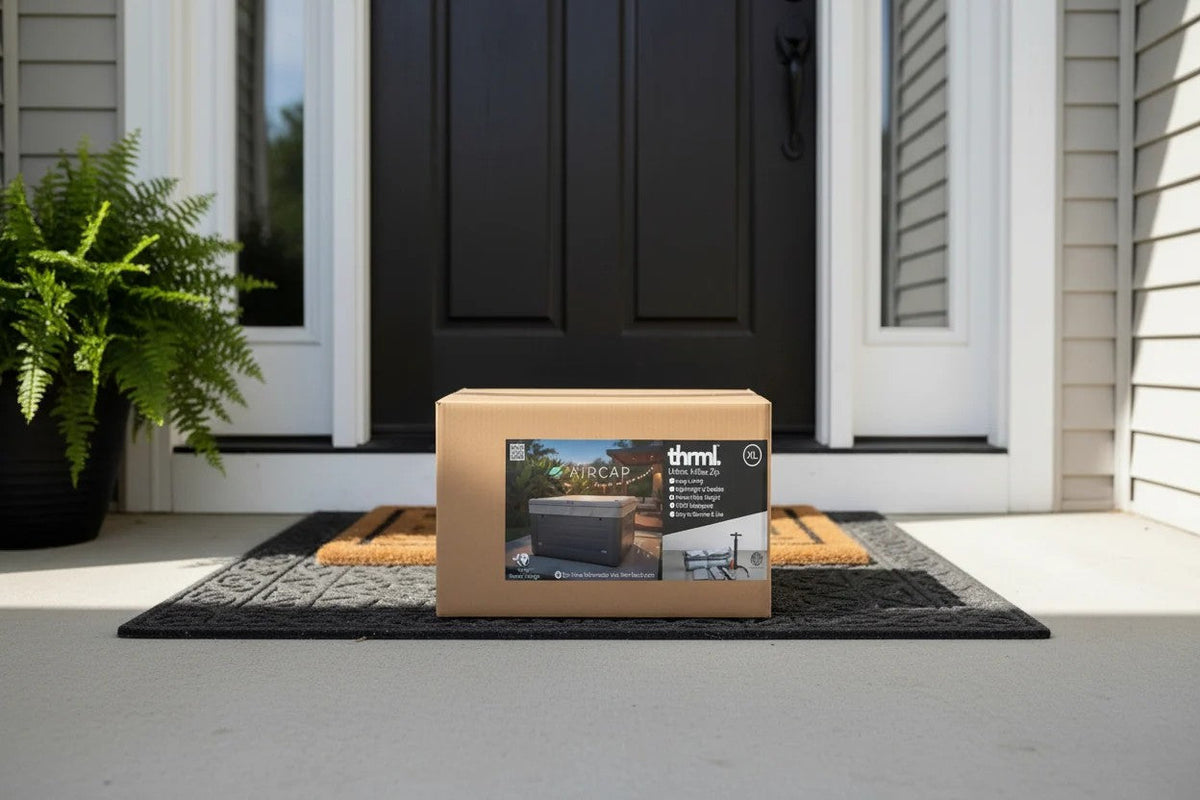
Clean and protect the vinyl with FROG Surface & Cover Cleaner. When it's time to replace a heavy foam cover, the Thrml AIRCAP 1 hot tub cover uses a foam-free, inflatable design that stays lightweight instead of absorbing water.
5. Overreacting to Cloudy Water With More Chemicals
When water turns cloudy, the instinct is often to add more shock or sanitizer right away. But cloudiness can come from several causes, including a dirty filter, high total dissolved solids (TDS), or unbalanced pH and alkalinity. Adding more chemicals without finding the cause rarely fixes the problem and can make the water even more unbalanced.
Avoid it: Work through cloudy water in this order:
1. Test the water and correct alkalinity and pH
2. Rinse or clean the filter
3. Shock the water to break down organic waste
4. Add a water clarifier to help the filter capture fine particles
5. If it's still cloudy after a full filter cycle, it's likely time to drain
6. Delaying a Full Drain and Refill
Water can only be corrected so many times before it needs to be replaced. Continuing to add sanitizer and balancers to water that's already saturated with waste is one of the more costly hot tub maintenance mistakes, since it uses up product without solving the underlying problem.
Most spas need a full drain and refill every three to four months, though heavy use and test results can shorten that timeline. Persistent odor, unstable sanitizer readings, recurring foam, or water that won't clear usually mean it's time to start fresh.
Avoid it: Mark your next drain date on a calendar, and flush the plumbing before each drain with SpaGuard System Flush so hidden buildup doesn't contaminate your new water. Our guide to the 5 signs your hot tub water needs to be drained covers what to look for.
7. Running the Spa Without a Consistent Routine
Treating maintenance as an occasional task, rather than a routine, is often what ties the other mistakes together. Testing only when something looks off, cleaning the filter only when flow drops, or checking the cover only after a problem appears all mean you're fixing issues after they've already developed.
Avoid it: A simple schedule catches most problems early:
|
How often |
What to do |
|
2 to 3 times a week |
Test the water and adjust sanitizer, pH, and alkalinity |
|
Weekly |
Shock the water, rinse the filter, check the water level, and look over the cover and equipment |
|
Monthly |
Deep clean the filter and wipe down the waterline |
|
Every 3 to 4 months |
Flush the plumbing, drain, clean, and refill |
|
Every 12 to 24 months |
Replace the filter cartridge |
|
Every 3 to 7 years |
Replace the cover |
More Hot Tub Maintenance Mistakes Worth Avoiding
· Letting the water level drop. If water falls below the skimmer, the pump can pull in air and lose its prime. Top off the water as it evaporates.
· Using household cleaners. Dish soap, glass cleaner, and bleach-based sprays can damage the shell and leave residue that causes foam. Stick with spa-safe products like those in our hot tub cleaning and maintenance collection.
· Turning the spa off to save energy. Reheating cold water usually uses more energy than keeping it at a steady temperature. Lower the temperature slightly instead when you'll be away. In freezing weather, keeping the spa running also protects the plumbing.
· Skipping a rinse before soaking. Lotions, deodorant, and hair products add to the waste your sanitizer has to fight. A quick rinse keeps water fresh longer.
· Storing chemicals poorly. Keep products in a cool, dry place with lids closed, and store oxidizers like chlorine and shock away from acids such as pH decreaser.
Building Better Habits Going Forward
None of these fixes require big changes to how you use your spa. Testing before adding chemicals, rinsing the filter on schedule, checking the cover, and paying attention to what the water is telling you prevent most hot tub maintenance mistakes from building up in the first place.
Small, consistent habits do more for water quality than an occasional deep fix after something has already gone wrong. Keeping a basic stock of supplies on hand helps too, so you can act as soon as a test shows something is off.
Conclusion
Most hot tub maintenance mistakes come down to skipped testing, delayed filter care, guessed chemical doses, or ignoring small warning signs until they become bigger problems. Building a consistent routine around testing, filtration, cover care, and timely drains keeps your water cleaner and your equipment running the way it should.
Hot Tub Pirate carries the sanitizers, test strips, filter care, and covers you need to stay ahead of these common mistakes, including FROG and SpaGuard water care. Have a question about your routine? Call us at (732) 366-9660 and talk to a real person.
Shop all hot tub chemicals and supplies
FAQs
What are the most common hot tub maintenance mistakes?
The most frequent mistakes are skipping regular water testing, letting the filter go too long between cleanings, guessing at chemical doses, ignoring a worn cover, and putting off a drain and refill. Each lets small imbalances build until they become visible problems.
How often should I test my hot tub water to avoid problems?
Testing two to three times a week under normal use is a good baseline, with more frequent checks after heavy use. Regular testing catches chemical drift before it turns into cloudy water or unstable sanitizer readings.
Why does adding more chemicals not fix cloudy water?
Cloudy water can come from a dirty filter, high total dissolved solids, or unbalanced pH and alkalinity, not just low sanitizer. Adding more chemicals without finding the cause often wastes product and can create a new imbalance.
How long can a hot tub filter be used before it needs replacing?
Most filter cartridges last 12 to 24 months with weekly rinsing and monthly deep cleaning, though heavy use can shorten that. Replace it sooner if the pleats are torn, flattened, or heavily stained.
How do I know how much of a chemical to add to my hot tub?
Check your spa's water capacity in the owner's manual or spec sheet, then follow the dosing directions on the product label for that volume. Add one chemical at a time with the jets running, and retest before adding more.
Should I turn off my hot tub when I'm not using it?
Usually not. Keeping the water at a steady temperature typically uses less energy than reheating it from cold, and it keeps water circulating through the filter. If you'll be away, lower the temperature slightly instead.
Can I use household cleaners on my hot tub?
No. Household cleaners can damage acrylic surfaces and leave residue that causes foam. Use cleaners made for spas and hot tubs.
When should I drain and refill my hot tub instead of treating it again?
Most spas need a full drain every three to four months, though persistent odor, unstable sanitizer, or recurring foam can mean it's needed sooner. At that point, the water can no longer be corrected with more chemicals alone.