
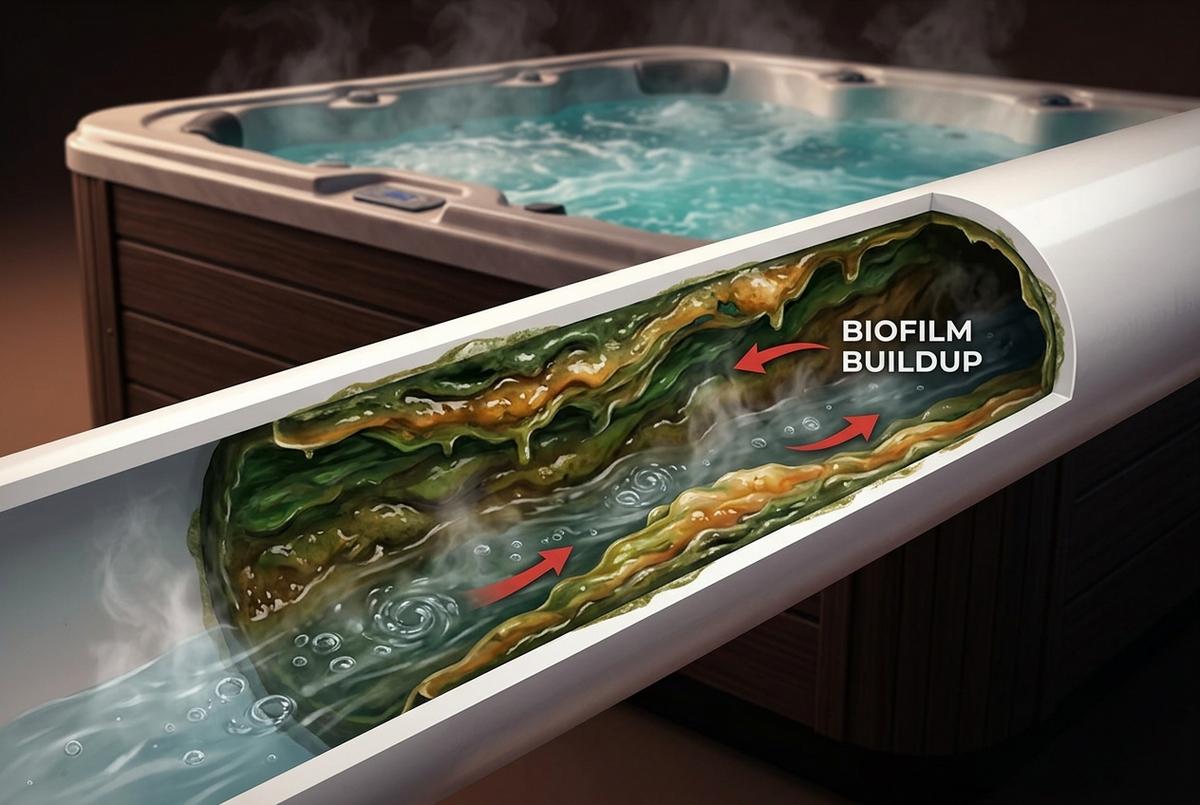
Hot tub biofilm is a slimy layer of bacteria and body oils that grows inside your spa's pipes and jets. Draining won't remove it, because the film stays stuck to the plumbing while the water runs out. If you refill without purging the lines first, leftover buildup can contaminate your fresh water. We recommend flushing the plumbing before every drain.
This guide covers where biofilm hides, what it does to your water, and how to purge the pipes before your next water change, including which products to use and what to do after you refill.
Hot Tub Biofilm at a Glance
|
Question |
Short answer |
|
What it is |
Bacteria living in a protective slime, fed by body oils, lotions, and sweat |
|
Where it grows |
Inside pipes, jet lines, and other wet surfaces behind the shell |
|
Why it matters |
It shields bacteria from sanitizer and keeps feeding waste back into the water |
|
Does draining remove it? |
No. Most of it stays stuck to the plumbing |
|
How to remove it |
Run a spa plumbing flush before you drain, then clean the filter and shell |
|
How often |
At every drain and refill, usually every 3 to 4 months |
What Hot Tub Biofilm Is and Where It Grows
Biofilm begins with waste. Body oils, lotions, sweat, and hair products build up inside the pipes and jet lines. Bacteria stick to this film and coat themselves in a slippery protective layer. Warm water speeds up the process, especially when sanitizer runs low.
Most biofilm is invisible because it forms behind the shell, in places you can't scrub and the filter never reaches. A tub can look spotless while the plumbing underneath is dirty. That hidden layer keeps releasing waste and bacteria into the water.
Biofilm is more than a cleaning problem. The CDC describes it as the slime layer that protects Legionella from disinfectants, and it gives germs like Pseudomonas, which causes hot tub rash, a place to survive. Keeping sanitizer in range and cleaning the system at every drain both help keep these germs in check.
Signs You May Have Hot Tub Biofilm
Hot tub biofilm rarely announces itself, but your water gives clues. Watch for these signs:
· Cloudy water that stays hazy after you balance and filter it
· A musty or unpleasant odor that comes back after shocking
· Sanitizer readings that drop fast after you add chlorine or bromine
· Foam that keeps coming back
· Slimy jet openings, or brown or white flakes in the water after the jets turn on
· A filter that clogs or turns slimy soon after cleaning
Any one of these can have other causes, such as a worn filter or unbalanced water. When two or three show up together, hidden plumbing buildup is a likely suspect. Rule out the filter first by checking it for torn or stained pleats, and replace it from our hot tub filter cartridges collection if needed. Then test the water with our water testing supplies.
Why Draining Alone Does Not Remove Biofilm
Biofilm doesn't leave with the water. A drain may rinse away a loose outer layer, but most of the film stays attached to the inside of the pipes. When fresh water flows over those coated surfaces, it picks up the leftover residue. The film also shields the bacteria underneath from sanitizer, which works best when it can reach a surface directly.
That's why problems can come back soon after a refill. You start with clean water, but it runs through dirty plumbing.
|
Drain and refill only |
Purge, then drain and refill |
|
Most biofilm stays stuck in the pipes |
A flush loosens buildup so it leaves with the old water |
|
Fresh water picks up leftover residue |
Fresh water starts in cleaner plumbing |
|
Sanitizer demand stays high in the new fill |
Sanitizer holds steadier |
|
Cloudy water, odor, and foam may return within weeks |
Water tends to stay clear longer |
Why You Should Purge the Pipes Before Draining
A purge before draining loosens biofilm, body oils, and other buildup that draining alone leaves behind. Those contaminants leave with the old water, so the plumbing stays cleaner and the fresh fill starts in better condition.
It Keeps Your Fresh Water Clean
A plumbing purge sends loosened biofilm, oils, and deposits out with the old water instead of leaving them in the pipes. Cleaner plumbing keeps fresh water cleaner for longer. Without a purge, leftover contaminants enter the new water and add to the sanitizer's workload from day one.
It Helps Sanitizer Hold Steady
When sanitizer drops quickly after you add it, something is using it up. Organic waste and biofilm consume chlorine and bromine before they can do their job. Removing that buildup lowers sanitizer demand in the new water. That matters even more on low-chlorine systems like FROG @ease, which holds free chlorine at 0.5 to 1.0 ppm and works best in clean water and plumbing.
It Cuts Down Odor and Foam
Persistent foam and odor usually come from oils and organic matter, and biofilm can add to both. A hot tub defoamer knocks foam down quickly, but it doesn't fix the root cause. A purge goes after the source, loosening the oils, lotions, and grime in the lines so they drain out.
You still need to clean the shell and the filter while the tub is empty, because those surfaces hold waste too. Together, these steps give a more thorough clean than draining and refilling alone.
How to Purge Your Hot Tub Pipes Before Draining
Wondering how to purge your hot tub pipes before draining? Start with the right supplies, then follow the steps in order.
What You Need Before You Start
Gather your supplies first, so the tub isn't sitting full of treated water while you look for tools. You'll need:
· A spa plumbing flush product (see the comparison below)
· A filter cleaner, such as SpaGuard Filter Cleaner
· A garden hose, plus a submersible pump if you want a faster drain
· A spa-safe surface cleaner, such as FROG Surface & Cover Cleaner
· Soft, non-abrasive cloths or sponges
· Test strips and balancing chemicals for the refill
· A new filter cartridge, if the old one is torn, flattened, or heavily stained
In cold weather, pick a mild day and refill quickly. An empty tub can freeze, and frozen water left in the lines can crack pipes and damage equipment. In New Jersey, that usually means finishing the job before the hard freezes of December through February, or waiting for a warm spell.
Choosing a Plumbing Flush Product
|
Product |
How to use |
Notes |
|
SpaGuard System Flush (1.5 lb / 24 oz) |
Add the whole bottle with the pump running and circulate for 15 minutes, then drain |
Quick pre-drain cleanout; works with all spa sizes and sanitizer systems |
|
ProTeam Spa System Clean (1 pt / 16 oz) |
Add one bottle with the jet pump running at 90°F or warmer, circulate at least 8 hours, then drain |
Longer soak time; good to run the day before a drain |
Always follow the label on the product you use. Neither one is a sanitizer, so don't soak while a flush is in the water.
Step-by-Step Purge and Drain Process
Follow these steps in order:
1. Remove the filter cartridge and clean it separately with a filter cleaner. Take out any floating dispenser or mineral cartridges too.
2. With the pump running and the cover open, add your plumbing flush product. Circulate it for the time on the label. Turn on every jet pump, and open the air controls and diverter valves so the flush reaches every line.
3. Don't worry if foam, flakes, or dark residue rise to the surface. That's buildup coming loose. Skim off what you can.
4. Turn off the spa, then switch off the power at the breaker.
5. Drain the water completely. Follow local rules for where spa water can go, and keep it away from storm drains and plants.
6. Wipe down the shell, jets, and waterline with a spa-safe cleaner. Skip household cleaners, which can damage the shell and cause foam.
7. Reinstall the clean filter and refill the tub. Fill through the filter compartment if your manufacturer recommends it, which helps prevent air locks.
8. Restore power, balance the water (alkalinity first, then pH), add stain and scale control if your water is hard, and bring your sanitizer into range before you soak.
For more on timing, read our guide to the 5 signs your hot tub water needs to be drained.
How to Slow Biofilm Growth Between Drains
Daily habits won't remove biofilm, but they can slow it down. Less waste in the water means less for bacteria to feed on. Use these habits:
· Shower before you soak to remove oils, lotions, and deodorant
· Rinse swimsuits in plain water, not detergent
· Keep sanitizer in range at all times, and test two to three times a week
· Shock the water weekly and after heavy use with a product from our hot tub shock collection
· Add an enzyme treatment weekly to help break down oils, such as SpaGuard Natural Spa Enzyme or Leisure Time Enzyme
· Rinse the filter weekly and deep clean it every 4 to 6 weeks
· Run the filtration cycles your manufacturer recommends so water doesn't sit still in the lines
· Keep the cover on when the spa is not in use
For more routine care, see our 10 tips to keep your hot tub clean and safe.
SpaGuard System Flush for Pre-Drain Plumbing Cleaning
Hot Tub Pirate carries SpaGuard System Flush, a 1.5 lb (24 oz) spa plumbing cleaner made for use before you drain and refill. It targets oils, lotions, grime, and debris in the plumbing, jets, and spa surfaces.
To use it, remove and clean the filter, then add the entire bottle to the water with the pump running. Circulate for 15 minutes, turn the spa off, and drain completely. It works with all spa sizes and with chlorine, bromine, and other sanitizer systems. It is not a sanitizer, shock, or weekly treatment.
Pair it with SpaGuard Filter Cleaner, and browse our hot tub cleaning and maintenance collection for the rest of your drain-day supplies. Online orders over $50 ship free in the USA, and orders placed before 3 p.m. Monday through Saturday ship the same day.
Conclusion
Hot tub biofilm hides where you can't wipe it, and draining alone leaves it behind. A plumbing purge before each drain loosens that buildup so it leaves with the old water. Clean the filter, wipe down the shell, and refill carefully, and your new water starts in good condition. Between drains, keep testing, shocking, and maintaining your filter to slow new buildup. If you have questions about your spa, call Hot Tub Pirate at (732) 366-9660 and speak with our team.
FAQs
Does draining a hot tub remove biofilm?
Draining a hot tub does not remove all biofilm, because much of it stays attached to the inside of the plumbing. Use a hot tub plumbing flush before draining to loosen buildup so it rinses away with the old water.
How do I clean the pipes before draining my hot tub?
Remove and clean the filter, then add a plumbing flush with the pump running. Circulate for the time on the label, turn off the spa, and drain completely. With SpaGuard System Flush, that means the whole bottle and 15 minutes.
How often should I flush hot tub plumbing?
Flush the plumbing at every drain and refill. Most spas need fresh water about every three to four months, though heavy use can shorten that window.
Can I use SpaGuard System Flush every week?
No. It is a pre-drain cleanout product, not a sanitizer, shock, or weekly treatment. Use it as part of your drain, clean, and refill routine.
What does hot tub biofilm look like?
It's usually invisible inside the pipes. When it shows, it looks like slime around jet openings or brown, gray, or white flakes that appear when the jets kick on.
Can hot tub biofilm make you sick?
It can. Biofilm protects germs such as Pseudomonas, which causes hot tub rash, and Legionella from sanitizer. Steady sanitizer levels and a plumbing purge at every drain lower that risk.
Why did my hot tub foam during the flush?
Foam and floating residue during a flush are normal. They mean oils and buildup are coming loose from the lines. Skim what you can and drain as directed.
Can I use bleach, vinegar, or dish soap to flush hot tub pipes?
No. Household products aren't dosed for spa plumbing. Dish soap leaves foaming residue, and bleach or vinegar can harm the shell, seals, or equipment. Use a spa-labeled plumbing flush.