

Description
Right-Sized Calcium Protects Your Surfaces
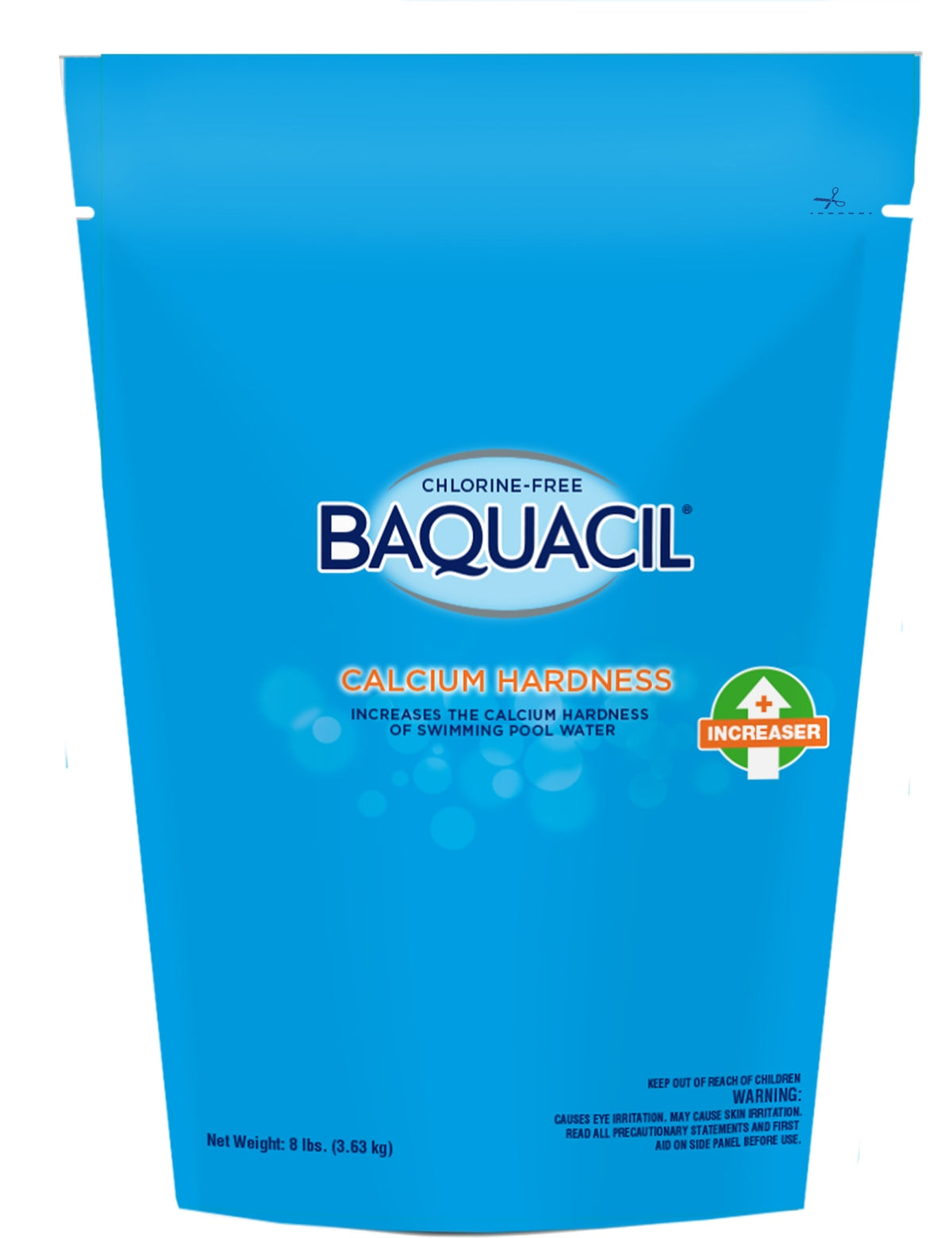
BAQUACIL® Calcium Hardness Increaser raises the calcium hardness of pool water, which helps protect your pool surface and equipment. Water that is too soft looks for calcium elsewhere, and it can pull it from plaster, grout and metal parts.
It is compatible with chlorine, bromine and BAQUACIL® pools. The 8 lb bag adds about 80 ppm to a 10,000-gallon pool.
Soft Water Is Aggressive Water
Low calcium hardness promotes corrosion. It can etch plaster, loosen tile grout and attack heaters and metal fittings. Bringing hardness into range keeps water balanced and gentle on your equipment.
Simple, Measured Dosing
One pound per 10,000 gallons raises calcium hardness about 10 ppm. For larger increases, add it in thirds, waiting 4 to 6 hours between additions.
Targets for Every Pool Type
BAQUACIL recommends 180 to 250 ppm for vinyl pools and 200 to 275 ppm for plaster pools.
Key Features and Benefits
- Raises calcium hardnessProtects surfaces and equipment.
- Helps prevent corrosionBalanced water is less aggressive.
- Predictable dose1 lb per 10,000 gallons adds about 10 ppm.
- Vinyl and plasterTargets for both pool types.
- Calcium chlorideFast-dissolving granules.
- Multi-systemChlorine, bromine and BAQUACIL pools.
Product Details
| Product Detail | Information |
|---|---|
| Brand | BAQUACIL® |
| Product Name | BAQUACIL® Calcium Hardness Increaser |
| Net Weight | 8 lb |
| Manufacturer SKU | 84469 |
| UPC | Not specified in reviewed product details |
| Product Type | Calcium hardness increaser (granular) |
| Active Ingredient | Calcium chloride |
| Target Range | 180–250 ppm vinyl; 200–275 ppm plaster |
| Dose | 1 lb per 10,000 gallons raises about 10 ppm |
| Large Increases | Add in ⅓ portions, 4–6 hours apart, when raising more than 50 ppm |
| Compatibility | Chlorine, bromine and BAQUACIL® pools |
| Signal Word | Not specified in reviewed product details |
How to Use
- Test hardness: Test calcium hardness weekly or have a BAQUACIL dealer test it.
- Calculate: 1 lb per 10,000 gallons raises hardness about 10 ppm.
- Broadcast: Spread over the water surface with the pump running.
- Split big doses: If you need more than 50 ppm, add it in thirds, waiting 4 to 6 hours between additions.
- Retest: Retest after 24 hours and adjust to 180–250 ppm (vinyl) or 200–275 ppm (plaster).
Important Compatibility and Safety Notes
Compatibility
Compatible with chlorine, bromine and BAQUACIL pools. Calcium chloride releases heat as it dissolves, so broadcast it over the water instead of dumping it in one spot. Add separately from other chemicals.
Safety First
Causes eye irritation and may irritate skin. Calcium chloride gets hot when it contacts water. Wear eye protection and gloves, avoid breathing dust and wash hands after handling. Store in a cool, dry place with the bag sealed, since it absorbs moisture. Add chemicals to water, never water to chemicals, and add one product at a time. Keep out of reach of children and pets, and always read and follow the full label directions and precautions.
Why Choose BAQUACIL Calcium Hardness Increaser?
It is a straightforward way to protect plaster, tile and equipment with the BAQUACIL balance line, with clear targets for vinyl and plaster pools.
Ideal For
- Pools filled with soft water
- Plaster and gunite pools
- Spring opening water balance
- Chlorine, bromine and BAQUACIL pools
Frequently Asked Questions
What should calcium hardness be in a BAQUACIL pool?
180 to 250 ppm for vinyl pools and 200 to 275 ppm for plaster pools.
How much Calcium Hardness Increaser do I add?
1 lb per 10,000 gallons raises calcium hardness about 10 ppm.
Can I add it all at once?
For increases over 50 ppm, add it in thirds, waiting 4 to 6 hours between additions.
What is it made of?
Calcium chloride.
What happens if calcium is too low?
Low calcium hardness promotes corrosion of plaster, grout and metal equipment.
Can I use it in a chlorine pool?
Yes. It is compatible with chlorine, bromine and BAQUACIL pools.