
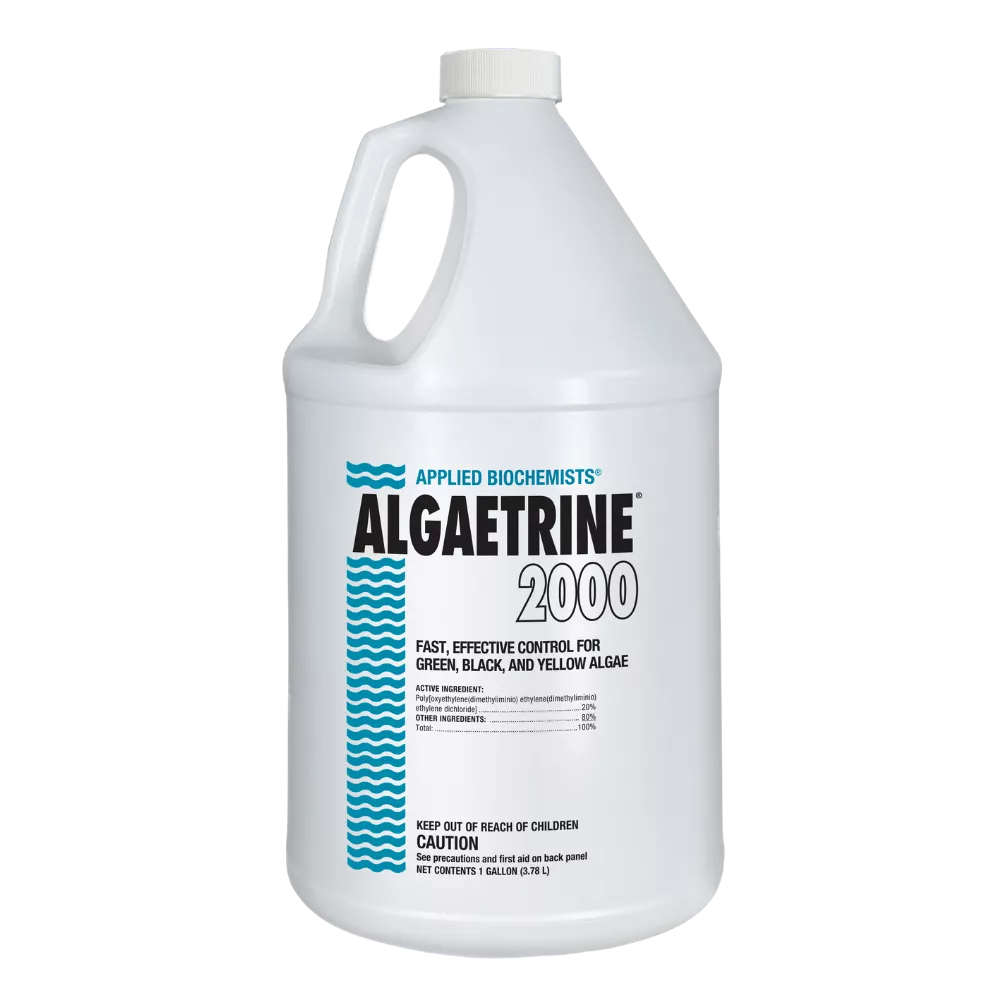

Description
Treats and Prevents Green, Black and Yellow Algae
Applied Biochemists® Algaetrine 2000 is a powerful algaecide that treats and prevents green, black and yellow algae. Its fast-acting polyquat formula takes on even the toughest algae, including black algae with its defensive coating.
The 1 gallon jug covers start-up, clean-up and a weekly maintenance routine for most pools.
One Algaecide for Every Common Algae
Green, black and yellow algae usually call for different products. Algaetrine 2000 is labeled to treat and prevent all three, which simplifies what you keep on the shelf.
Fast Results With Brushing and Vacuuming
For visible algae, add 16 to 24 fl oz per 10,000 gallons and vacuum out the dead algae. For black algae, add 16 fl oz per 10,000 gallons as soon as it appears and brush the spots daily.
Easy Weekly Prevention
Once the pool is clean, 4 to 8 fl oz per 10,000 gallons each week keeps algae from getting a foothold.
Key Features and Benefits
- Green, black and yellow algaeTreats and prevents all three.
- Polyquat formula20% active ingredient.
- Fast actingWorks on tough, coated algae.
- Weekly maintenance4–8 oz per 10,000 gallons.
- Value gallonCovers many treatments.
- Compatible when dilutedWorks with normal pool chemicals.
Product Details
| Product Detail | Information |
|---|---|
| Brand | Applied Biochemists® |
| Product Name | Algaetrine 2000 |
| Size | 1 gallon |
| Manufacturer SKU | 40716 |
| UPC | 785336407166 |
| For Use In | Swimming pools |
| Product Type | Polymer (polyquat) algaecide |
| Active Ingredient | Poly[oxyethylene(dimethyliminio)ethylene(dimethyliminio)ethylene dichloride] 20% |
| Prevention Start-Up Dose | 8–10 fl oz per 10,000 gallons |
| Visible Algae Dose | 16–24 fl oz per 10,000 gallons |
| Black Algae Dose | 16 fl oz per 10,000 gallons |
| Weekly Maintenance | 4–8 fl oz per 10,000 gallons |
| Wait to Swim | Not specified in reviewed product details |
How to Use
- Shake well: Shake the jug before measuring.
- Add with circulation on: Apply directly to the pool with the pump running and allow at least one hour to distribute before turning it off.
- Start-up prevention: 8–10 fl oz per 10,000 gallons.
- Visible or black algae: Visible: 16–24 fl oz per 10,000 gallons, then vacuum. Black: 16 fl oz per 10,000 gallons when it appears, brushing daily.
- Weekly maintenance: 4–8 fl oz per 10,000 gallons each week. Repeat treatment until control is evident.
Important Compatibility and Safety Notes
Compatibility
Do not mix concentrated Algaetrine 2000 with other concentrated pool chemicals, such as dry or liquid chlorine. Once diluted in the pool, it is compatible with the chemicals normally used to treat pools. Salt and biguanide compatibility are not stated.
Safety First
Avoid contact with eyes, skin and clothing, and wash thoroughly after handling. Store tightly closed in a cool, dry place. Keep out of reach of children and pets, and always read and follow the full label directions and precautions on your container.
Why Choose Applied Biochemists Algaetrine 2000?
It covers green, black and yellow algae in one copper-free polyquat jug, with a simple weekly maintenance dose.
Ideal For
- Pools with mixed algae problems
- Owners who prefer a non-copper algaecide
- Weekly maintenance routines
- Pool service professionals
Frequently Asked Questions
What algae does Algaetrine 2000 kill?
It treats and prevents green, black and yellow algae.
How much Algaetrine 2000 do I use?
Start-up prevention: 8–10 fl oz per 10,000 gallons. Visible algae: 16–24 fl oz. Black algae: 16 fl oz. Weekly maintenance: 4–8 fl oz.
Is Algaetrine 2000 a copper algaecide?
No. Its active ingredient is a 20% polyquat polymer, not copper.
Can I add Algaetrine 2000 with chlorine?
Don't mix the concentrate with concentrated chlorine. Add each to the pool separately; once diluted, it is compatible with normal pool chemicals.
How do I treat black algae with Algaetrine 2000?
Add 16 fl oz per 10,000 gallons when black algae first appears, brush the spots daily and vacuum the settled algae.
Will polyquat algaecide foam?
Polyquat algaecides are generally low-foaming. Applied Biochemists warns that overdosing any algaecide can cause foaming, so use the label dose.