
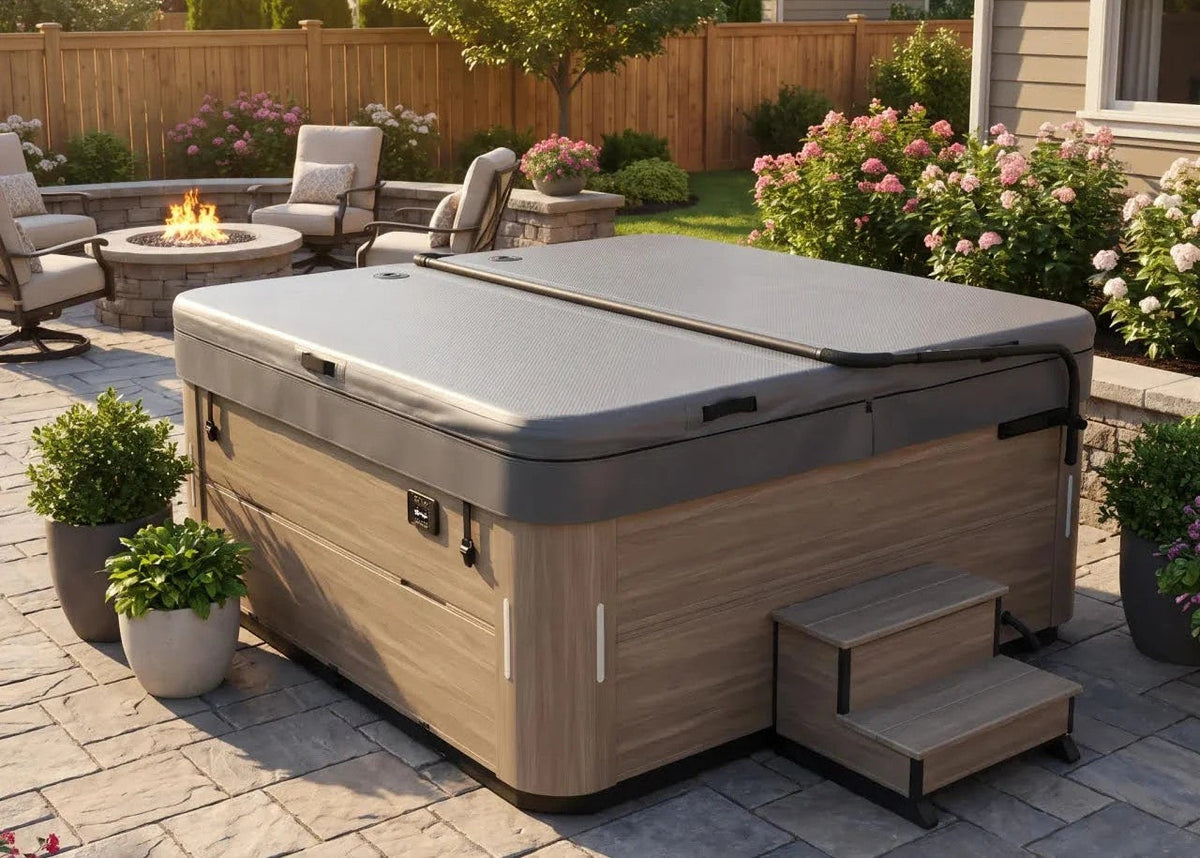
A spa cover usually needs replacing when it becomes waterlogged, sags out of shape, cracks internally, or no longer seals against the spa's edges. Knowing when to replace hot tub cover parts that wear out, rather than just patching the surface, saves on heating costs and protects the water underneath. Seven warning signs clearly point to that decision.
How Does a Spa Cover Protect Your Hot Tub?
A properly fitted cover holds heat inside the spa, slows water evaporation, and keeps leaves, dust, and debris out of the water. It also shields the shell and equipment from sun, rain, and temperature swings that would otherwise wear on the spa over time.
A cover supports your water-care routine, but it doesn't replace it. Balanced water chemistry and regular testing still matter regardless of how well the cover fits, since a cover manages heat and debris, not sanitation.
What Are the Signs You Need a New Spa Cover?
Seven specific signs indicate a cover has reached the end of its useful life. Some point to isolated repairs, while others suggest the whole cover needs replacing.
1. The Cover Has Become Waterlogged and Heavy
A cover that feels noticeably heavier than when it was new has likely absorbed water into the foam core, often because the vapor barrier underneath the vinyl has failed. That trapped moisture adds weight gradually, so it's easy to miss until lifting the cover becomes a real effort.
A heavier cover puts extra strain on a cover lifter and on anyone removing it by hand. Weight alone doesn't confirm the cover needs replacing, but it's a strong signal worth checking further with the next few signs.
2. The Cover Is Sagging or No Longer Sits Flat
Sagging causes rainwater to pool on top instead of running off, adding weight and allowing moisture to work its way into the foam over time. A cover that no longer sits flat also creates gaps at the edges, allowing heat to escape.
Beyond the insulation loss, a sagging cover becomes harder to handle safely, especially if pooled water shifts unexpectedly during removal.
3. The Foam Core Is Cracked, Compressed, or Broken
Visible cracks, crushed sections, or areas where the cover no longer holds its shape usually mean the internal foam has broken down. This matters more than surface wear, since compressed foam loses much of its insulating ability even when the outer vinyl still looks intact.
Patching a tear in the vinyl won't restore foam that's already crushed or split underneath. Once the core itself is compromised, the cover's ability to retain heat drops regardless of how the outside looks.
4. The Vinyl, Seams, Handles, or Straps Are Failing
Brittle or cracking vinyl, splitting seams, torn handles, and broken straps are common failure points on an aging cover. A single torn handle or a worn strap is often a straightforward repair rather than a reason to replace the whole cover.
Widespread failure across multiple seams, several straps, or large sections of vinyl is a different situation. At that point, repairing each issue individually usually costs more time and money than starting with a new cover.
5. The Cover No Longer Fits or Seals Properly
Gaps along the edges, curled corners, or a skirt that no longer sits against the spa's sides all reduce how well a cover seals in heat. A cover that shifts in the wind or doesn't sit securely is also failing at one of its main jobs: keeping out debris and weather.
Poor fit sometimes develops gradually as vinyl stretches or foam settles unevenly. Even a cover with no visible damage can lose effectiveness this way, which is why fit deserves its own check separate from looking for cracks or tears.
6. Your Hot Tub Is Losing Heat Faster Than It Used To
Noticeably faster heat loss is one of the more direct reasons owners start asking when to replace hot tub cover components rather than adjust the temperature setting again. A failing cover is a common contributor, but it isn't the only possible cause.
Circulation issues, heater performance, insulation elsewhere on the spa, or even a change in temperature setting can all affect how quickly heat escapes. Ruling out equipment and settings first helps confirm whether the cover itself is actually the source of the problem.
7. Your Energy Use and Maintenance Costs Are Increasing
A waterlogged or poorly insulated cover can make the heater work harder to maintain the same water temperature, increasing energy consumption over time. Faster evaporation also means more frequent adjustments to water chemistry and greater overall chemical use.
These costs tend to build gradually rather than appear all at once, which is part of why a failing cover often goes unnoticed until the increase becomes hard to ignore.
Should You Repair or Replace a Spa Cover?
Minor issues, like a single broken strap, a damaged handle, or a small area of loose stitching, are usually worth repairing rather than replacing outright. These fixes are typically inexpensive and restore normal function without much disruption.
Waterlogged foam, widespread cracking, severe compression, or a cover that consistently won't seal properly point toward replacement instead. There's no universal rule here, since cover age, original construction quality, and local climate all affect how well a cover holds up and whether repair still makes sense.
When Should You Ask a Hot-Tub Professional for Help?
Uncertainty about whether to measure for a replacement, suspected heater or insulation problems, or a cover that's become too heavy to lift safely are all good reasons to bring in professional help. Structural damage to the spa itself, difficulty removing the cover safely, or signs of water intrusion beyond the cover also warrant a closer look from someone qualified.
If you're not confident a repair will actually hold up, getting a second opinion before investing time in a fix that may not last is often the more practical choice.
Conclusion
A waterlogged cover, sagging shape, cracked foam, failing vinyl or straps, poor fit, faster heat loss, and rising energy costs are the seven signs that point toward replacement rather than repair. Catching these early and knowing when to replace hot tub cover components, rather than the whole unit, keeps your spa running efficiently and protects the water underneath. Hot Tub Pirate carries spa covers and related accessories for owners ready to replace a cover that's no longer doing its job.
FAQs
How do I know if my hot tub cover is waterlogged?
A waterlogged cover feels noticeably heavier than when it was new, since water has soaked into the foam core rather than staying out. This usually means the vapor barrier underneath the vinyl has failed and is no longer keeping moisture out.
How often should a spa cover be replaced?
There's no fixed timeline, since climate, sun exposure, and cover quality all affect how long a cover lasts. Watching for waterlogging, sagging, cracked foam, or poor fit is a more reliable guide than following a set schedule.
Can a damaged hot tub cover be repaired?
Minor issues like a broken strap, damaged handle, or limited stitching problems are often repairable. Widespread cracking, waterlogged foam, or extensive seam failure usually make replacement the more practical option.
Does a spa cover affect energy costs?
Yes, a poorly insulated or waterlogged cover can make the heater work harder to maintain the water temperature, increasing energy use over time. Faster evaporation from a failing cover can also increase the need for chemical and water replacement
How do I measure my hot tub for a replacement cover?
Measure the spa directly rather than using the old cover's dimensions, since a worn cover may have stretched or distorted. Confirming length, width, corner radius, and skirt length with the manufacturer or a qualified supplier helps ensure an accurate fit.